Saturday, June 5, 2010
Looking for a great query letter & agent response? Look no further.
Ok, some of you (those who are strictly readers) may not find this interesting, but anyone looking to write for the YA market or anyone interested in query letters in general may want to hop on over to The YA Highway Blog. There's a great sample of a query letter by Kirsten Hubbard that landed her an agent. As well, her agent Michelle Andelman of Lynn C. Franklin Associates follows up with her response of why this query worked so well for her. And, I must say, the query sure made me want to read Kristen's manuscript. Like Mandarin will be out with Delacorte in the spring of 2011. Congratulations Kristen. I really look forward to reading it.


I heart you, You haunt me by Lisa Schroeder

But dating a ghost has it's problems. Before long Ava finds that her sanity and privacy are too high a price to pay for love. She begins avoiding Jackson and that means avoiding sleep. She doesn't know where to turn for help since even her best friend thinks Ava's crazy when she confides in her. In the end, Ava has to let go of guilt and embrace life to free herself and to free Jackson.
I heart you, You haunt me is poignant quiet story. But the chord it really touched in me is the one so many editors and agents are dying to bring to the printed page; a unique voice. The author's ability to capture 15 old Ava's voice with truth and simplicity is what really makes this quiet story shine. The poems are rich and insightful and yet as subtle as the scent of sandalwood shaving cream that alerts Ava to Jackson's ghostly presence. They echo passion and grief and confusion and fear as readily as they do love. It's one of those 'one sitting' books that you won't want to put down until you turn the last satisfying page.
Friday, June 4, 2010
Slate Launches Interactive YA Serial
 If you're into vampires and such, authors Laura Moser and Lauren Meching have just launched a YA serial on www.slate.com. Serials aren't new, but this is an interactive story with online features where the characters tweet as well as post on Facebook and You Tube. I'm not so much into vampires myself, but it's worth checking out, My Darkylng. Expect 11 three chapter segments posted on Fridays. The site went live today.
Thursday, June 3, 2010
In defense of librarians
Below is a letter that my friend and fellow author, Helaine Becker sent to the National Post re: a derogatory comment about librarians. It's such a great letter, that I want everyone to read it. Yeah Helaine! And if you think this letter is great, you can check out her books too. You'll find a link to her website at the bottom of the page. PS. Helaine is really really funny:)
Dear Mr. Gunter,
I was enjoying your analysis of Easy Rider in this morning's National Post
("Getting over Easy Rider, "June 2,2010) when I was caught short by this
sentence: "The teens who were prompted by its anti-establishment message to
pledge themselves to change the world are today school librarians and public
broadcasting technicians living in suburban bungalows, looking around the
next bend at pensionability and wondering whether to open a B&B in Niagara."
Yikes! There's a sweeping stereotype there!
I know you were trying to humorously make a point about becoming the essence
of establishment self-focus. But clearly, you have not met many school
librarians, nor do you fully appreciate what they do every day. (I can't
speak for the broadcasting technicians.)
I am not a school librarian, but in my career as a writer of children's
literature, I have had the great privilege of meeting and spending time with
hundreds of school librarians across North America - from Nunavut to New
Brunswick, from the Jane-Finch Corridor in the GTA to the rural communities
of Manitoba, Alberta and Yukon; in Texas, California, New York and Lima
(Peru). Virtually every single one of the people I met are still honoring
that pledge to change the world.
Don't be fooled by the prim reading-glasses-on-chains cartoon image.
Teacher-librarians are true revolutionaries, trying to change and improve
society by empowering the most vulnerable members of society: children.
Their working conditions: abysmal.
Their weapon: literacy.
Their opposition: entrenched bureaucracy that gives lip service to literacy
and equity, but shows its true colors by gutting schools of books and
trained staff.
Meet, for example, Nina W., a school-librarian in the great State of
California who currently has responsibility for three inner city schools,
virtually no support from administration (when I visited with her two weeks
ago, nearly 600 teachers had just been let go and were engaged in costly and
divisive legal hearings instead of teaching in the classroom). Yet despite
being stretched nearly to the breaking point, Nina still managed to
administer a Reading is Fundamental book program for Kindergarten and grade
1 students, organize author visits to inspire hundreds of children, and
facilitate delivery of books to needy schools that were collected on an
independent book drive.
Or meet Fabienne T., who works in a remote Northern community. Her student
body contains a high number of kids who come to school hungry, tired and
unprepared to learn because of upheaval at home and in their community. For
these children, literacy is truly a foreign concept - their own culture did
not even have a written language 40 years ago! Many elders there are
actually suspicious of reading as a form of learning, since their own
educational system involved a more active approach, being out on the land.
Yet Fabienne cheerfully strides from school to school, bringing books and
enthusiasm and a desire to help improve the opportunities available to her
charges. Those opportunities will only open to them when they possess the
skills needed to "make it" in the contemporary world, so with her copies of
"Clifford the Big Red Dog" and "Twilight" in hand, Fabienne is truly
managing to change their worlds.
Or why not let me introduce you to Jenny E., who teaches in a tough primary
school in one of Toronto's most challenging neighborhoods. To see what she
has done with these old-too-soon kids is nothing short of miraculous, and
she's been doing it for more than 20 years, day in and day out (I'm sure the
number is higher than that, but I don't want to embarrass her!).
The crisis facing school libraries today is an issue that has not yet
surfaced in the Canadian consciousness. Yet let me assure you, it is very
real, pervasive, and will have long-term consequences. Only a tiny
percentage of Canadian school libraries meet the minimal standards (Set by
the Canadian Library Association ) required to achieve learning objectives
in all curricular areas, not just literacy.
A fully functional school library is the heart of a school, providing
necessary sustenance and support for teachers and students. It is at the
vanguard of "best practices," incorporating information literacy into school
culture, and it the avenue through which students learn how to do research,
analyze sources and interpret media messaging.
School librarians are professionally committed to freedom of thought and
speech, and to the notion that teaching kids how to learn is the root of all
education. If that's not progressive, I don't know what is.
I know, I know, you didn't really mean to disparage school librarians -
yours was a throwaway comment designed for a laugh. But it perpetuated a
lie, and was a disservice to some of the most revolutionary members of our
society. But! Here's the good news! You can easily correct that disservice!
Let me suggest that, next Fall, you accompany me to some representative
school libraries in the GTA. Let me show you how we are letting down
Canadian students by underfunding our school libraries. Let me show you how
the mouth-noises that insist "we support literacy" are a lie when in fact
the school libraries in our country are short of books and staff.
On a personal note, it was in a school library that I first fell in love
with books. That early exposure and support has enabled me to live a full
and productive life as a literate citizen.
When I speak to kids during my school presentations, I often ask them, "Why
are you learning how to read?" The typical response is, "so I can get a job
one day." "So I can get good grades." Or simply a shrug of shoulders - we
are made to read and write because the grownups want us to.
I tell the kids that all of those answers are all acceptable ones, but are
not the best reasons. Do you really want to learn to read just so you can
grow up to become an obedient worker bee, or to boast a meaningless A on
meaningless report card? No.
No, The real reason you should want to learn how to Read well, Write well
and Speak well is because these are the tools that give you power - both the
power over your own life, and the power to persuade others to make
improvements to our world.
School librarians are bringing power to the people, every day. Please give
them their due.
Sincerely,
Helaine Becker
Author
www.helainebecker.com
www.helainebecker.blogspot.com
Follow me on twitter! Twitter.com/Helainebecker
Dear Mr. Gunter,
I was enjoying your analysis of Easy Rider in this morning's National Post
("Getting over Easy Rider, "June 2,2010) when I was caught short by this
sentence: "The teens who were prompted by its anti-establishment message to
pledge themselves to change the world are today school librarians and public
broadcasting technicians living in suburban bungalows, looking around the
next bend at pensionability and wondering whether to open a B&B in Niagara."
Yikes! There's a sweeping stereotype there!
I know you were trying to humorously make a point about becoming the essence
of establishment self-focus. But clearly, you have not met many school
librarians, nor do you fully appreciate what they do every day. (I can't
speak for the broadcasting technicians.)
I am not a school librarian, but in my career as a writer of children's
literature, I have had the great privilege of meeting and spending time with
hundreds of school librarians across North America - from Nunavut to New
Brunswick, from the Jane-Finch Corridor in the GTA to the rural communities
of Manitoba, Alberta and Yukon; in Texas, California, New York and Lima
(Peru). Virtually every single one of the people I met are still honoring
that pledge to change the world.
Don't be fooled by the prim reading-glasses-on-chains cartoon image.
Teacher-librarians are true revolutionaries, trying to change and improve
society by empowering the most vulnerable members of society: children.
Their working conditions: abysmal.
Their weapon: literacy.
Their opposition: entrenched bureaucracy that gives lip service to literacy
and equity, but shows its true colors by gutting schools of books and
trained staff.
Meet, for example, Nina W., a school-librarian in the great State of
California who currently has responsibility for three inner city schools,
virtually no support from administration (when I visited with her two weeks
ago, nearly 600 teachers had just been let go and were engaged in costly and
divisive legal hearings instead of teaching in the classroom). Yet despite
being stretched nearly to the breaking point, Nina still managed to
administer a Reading is Fundamental book program for Kindergarten and grade
1 students, organize author visits to inspire hundreds of children, and
facilitate delivery of books to needy schools that were collected on an
independent book drive.
Or meet Fabienne T., who works in a remote Northern community. Her student
body contains a high number of kids who come to school hungry, tired and
unprepared to learn because of upheaval at home and in their community. For
these children, literacy is truly a foreign concept - their own culture did
not even have a written language 40 years ago! Many elders there are
actually suspicious of reading as a form of learning, since their own
educational system involved a more active approach, being out on the land.
Yet Fabienne cheerfully strides from school to school, bringing books and
enthusiasm and a desire to help improve the opportunities available to her
charges. Those opportunities will only open to them when they possess the
skills needed to "make it" in the contemporary world, so with her copies of
"Clifford the Big Red Dog" and "Twilight" in hand, Fabienne is truly
managing to change their worlds.
Or why not let me introduce you to Jenny E., who teaches in a tough primary
school in one of Toronto's most challenging neighborhoods. To see what she
has done with these old-too-soon kids is nothing short of miraculous, and
she's been doing it for more than 20 years, day in and day out (I'm sure the
number is higher than that, but I don't want to embarrass her!).
The crisis facing school libraries today is an issue that has not yet
surfaced in the Canadian consciousness. Yet let me assure you, it is very
real, pervasive, and will have long-term consequences. Only a tiny
percentage of Canadian school libraries meet the minimal standards (Set by
the Canadian Library Association ) required to achieve learning objectives
in all curricular areas, not just literacy.
A fully functional school library is the heart of a school, providing
necessary sustenance and support for teachers and students. It is at the
vanguard of "best practices," incorporating information literacy into school
culture, and it the avenue through which students learn how to do research,
analyze sources and interpret media messaging.
School librarians are professionally committed to freedom of thought and
speech, and to the notion that teaching kids how to learn is the root of all
education. If that's not progressive, I don't know what is.
I know, I know, you didn't really mean to disparage school librarians -
yours was a throwaway comment designed for a laugh. But it perpetuated a
lie, and was a disservice to some of the most revolutionary members of our
society. But! Here's the good news! You can easily correct that disservice!
Let me suggest that, next Fall, you accompany me to some representative
school libraries in the GTA. Let me show you how we are letting down
Canadian students by underfunding our school libraries. Let me show you how
the mouth-noises that insist "we support literacy" are a lie when in fact
the school libraries in our country are short of books and staff.
On a personal note, it was in a school library that I first fell in love
with books. That early exposure and support has enabled me to live a full
and productive life as a literate citizen.
When I speak to kids during my school presentations, I often ask them, "Why
are you learning how to read?" The typical response is, "so I can get a job
one day." "So I can get good grades." Or simply a shrug of shoulders - we
are made to read and write because the grownups want us to.
I tell the kids that all of those answers are all acceptable ones, but are
not the best reasons. Do you really want to learn to read just so you can
grow up to become an obedient worker bee, or to boast a meaningless A on
meaningless report card? No.
No, The real reason you should want to learn how to Read well, Write well
and Speak well is because these are the tools that give you power - both the
power over your own life, and the power to persuade others to make
improvements to our world.
School librarians are bringing power to the people, every day. Please give
them their due.
Sincerely,
Helaine Becker
Author
www.helainebecker.com
www.helainebecker.blogspot.com
Follow me on twitter! Twitter.com/Helainebecker
Tuesday, June 1, 2010
Poster Boy by Dede Crane

I'm a fan of Dede Crane. I liked her first novel Sympathy, and I liked her first YA novel, The 25 Pains of Kennedy Baines even more. I've had her second YA novel Poster Boy on my 'to read pile' for a quite a while now. But somehow it got shuffled to the bottom.
Life couldn't be sweeter for 16 year old Gray Fallon. He has a girlfriend who lets him fondle her beautiful breasts, a best friend to get high with, and parents who let him move into the basement and paint his room black (one wall at least). On weekends he has friends over to play video games, play ping pong and hang out in the hot tub. He has a part time job at the movie theatre where he could score free tickets, and he's found someone who can help him pass trig. Then...a single phone call from the doctor's office about his little sister's unexplained leg pains and the C-word changes everything.
Pretty soon his parents are fighting, his girlfriend dumps him, and Gray discovers that carcinogens are everywhere; from household cleaners to the nail polish his little sister, Maggie adores. Gray sets out to rid the house of all possible toxins and convinces his mother to adopt a macrobiotic diet. None of that seems to impede Maggie's decline, so Gray sets out to make a personal difference by choosing to leave home and adopt a 'back to the land' approach to living. Unfortunately his 'tell it like it is' approach has unforeseen consequences.
I must admit that it took me a few chapters to get into Poster Boy. But in Crane's capable hands, Gray, his crew, his parents, and his little sister, come alive on the page. Maggie is as brave as she is nerdy and Gray is a flawed hero that any of us can relate to. The unintended consequences of his choices are as painful to us as they are to he and his family. But the final chapters of this novel is where Crane's writing really shines. The author doesn't shy away from Maggie's death, but instead celebrates it in a way that feels like she's releasing Maggie's soul from the pages of the book. I found myself moved to tears, and I suspect that you will too.
Sunday, May 30, 2010
Catching up on fav. authors
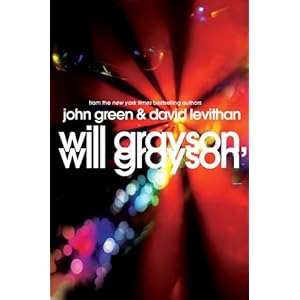
Ok, so you know I'm not feeling too hot when I spend an entire Sunday (even though it's pissing rain) laying about the couch with my laptop & jumping from one blog and website to another. But, and here's the upside...it gave me the chance to catch up on a few of my fav authors. Take David Levithan for example. Not only does this guy write awesome books like Nick and Norah's Infinite Playlist (with the equally talented Rachel Cohn), The Realm of Possibility and Boy Meets Boy (this one is so good...on second thought, they're all so damn good) but he's also the founding editor of Push Imprint for Scholastic, a press dedicated to finding new authors and new voices who "tell it like is is" (featuring writers like Markus Zusak for example). Of course the guy couldn't stop there and leave us poor shame-faced, inadequate, creative types to wallow in his well-earned glory. Noooo. He had to go and come up with more of his genius collaborations, this time with another fav author, John Green of An Abundance of Katherines fame. The book they collaborated on, Will Grayson, Will Grayson will be joining my precarious "to read pile" just as soon as I'm well enough to get off this couch and hit one of several local independent book stores I'm lucky enough to live near. In the meantime, you may want to check out this interview in Out with two of this decades great YA writers.
Subscribe to:
Posts (Atom)


 Posts
Posts